
FUTURE GUIDE
Automotive control systems engineer
Beyond the possible – an engineer who designs the transport of the future.
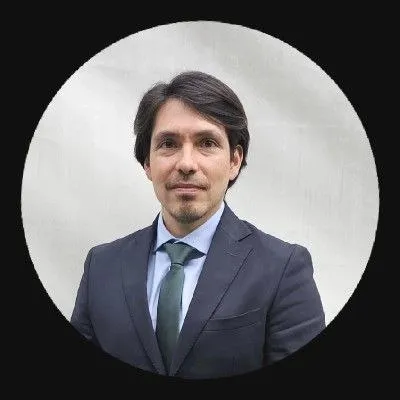
Jaziel Díaz MirónManager of large industrial projects in mining and petrochemicals Belgium
Career path
-
About me
I’m an industrial engineer. I studied at ENIM in Metz, France, and later did an international MBA. I chose the automotive sector because it is one of the best-known options for an engineer. Everybody knows the car brands, and the industry is very well developed, so it was a good place to start my career.
My first job was at PSA Peugeot Citroën in 2008. I worked 14 years in automotive, with PSA, Renault, Jaguar Land Rover and Segula, in France, Spain, Slovenia, the UK, Romania and Russia, on models like the Sandero, Logan, Kadjar, Megane, Range Rover and Peugeot Partner. My work was on the production side: geometry and quality control of the car body and parts using precision control jigs, and the design and installation of new assembly lines. I led teams of up to 13 engineers. On one project in Russia we reached zero quality defects on the final car.
Today I work on large industrial projects in mining and petrochemicals, managing contracts, costs, subcontractors and international teams. What I like most is travelling and working in different countries, always on projects. You start from zero and see the plan become real, with new people, a new culture and new challenges each time.
Prospects and change
-
When a car becomes intelligent
A modern car has sensors, such as cameras, radar and ultrasonic sensors, that detect what is around it. This information goes to electronic control units, small computers that decide what to do: brake, accelerate or correct the steering. Then the brakes, steering and engine carry out the decision. This happens many times per second.
So yes, a modern car has dozens of computers inside, and software is becoming as important as mechanics.
-
Human or algorithm?
Engineers use a scale from level 0, where the driver does everything, to level 5, where the car does everything. Most cars today are at level 1 or 2. The car helps, but the driver is still responsible and must be ready to take control.
The difficult part is unexpected situations: a child crossing, snow covering the road markings, an object on the road. You can test millions of cases and still meet one nobody thought about. For this reason, when the system is not sure, it gives control back to the driver or stops the car safely.
-
Artificial intelligence behind the wheel
AI already does some tasks very well, like reading traffic signs or detecting pedestrians. Replacing the driver completely, everywhere and in all weather, is much more difficult. I think it will come step by step: first on motorways, in some cities, or for trucks.
The technical challenge is reliability in rare situations. On the ethical side there are open questions: who is responsible in an accident, how the car should decide when an accident cannot be avoided, and how the data the car collects is protected.
-
Safety technology we don’t notice
These systems are developed under strict safety standards. Engineers analyse in advance what can fail, and critical functions often have a backup. They are tested in simulation, on test tracks, in very cold and very hot conditions, and in independent crash tests. Manufacturing is also part of safety: if a sensor is mounted a few millimetres out of position, it can point in the wrong direction. This is why precision and quality control on the production line are so important.
About trust: the computer reacts in milliseconds and doesn’t get tired or distracted, so in some situations it reacts better than a person. But today the best result is still the car and the driver working together.
-
Electric vehicles
An electric car has fewer mechanical parts than a combustion car, but much more electronics. The key element is the battery, and a dedicated system checks its charge and the temperature of each cell all the time. Batteries don’t work well when they are too cold or too hot, so the car heats or cools them constantly. When you brake, the motor recovers part of the energy.
The main challenges are charging time, range in winter, price, and the raw materials for batteries. I know this last part well because I’ve worked on large mining projects. Electric cars will be important, but I’m not sure they will be the only solution. We may find other energy sources in the future.
-
The car as an integrated digital system
In the past, each function had its own small computer. Now manufacturers group them into a few central computers connected by an internal network. The car can also receive software updates over the internet, like a phone.
Because the car is connected, cybersecurity is essential, as for any computer. In Europe, manufacturers are now required by regulation to manage cybersecurity during the whole life of the vehicle.
-
The global automotive industry
A car is built with parts and equipment from all over the world. On one Renault project I managed, the equipment for 2 new production lines was designed with Turkish and Indian suppliers, manufactured in China, and installed and commissioned by Spanish suppliers.
The main changes today are the move to electric cars, the growing importance of software, and new manufacturers, especially from China. International teams are necessary, and a big part of the work is making people from different countries and cultures work together.
Guide to the profession
-
Professions shaping the future
Demand is growing in software and embedded systems, artificial intelligence and data, cybersecurity, batteries and energy, robotics and factory automation, and functional safety. There is also demand for people who coordinate all these specialists, like systems engineers and project managers who understand both the technology and the people.
-
What a future automotive engineer should know
Mathematics and physics are the base, and today programming is necessary in almost every area. Problem-solving is also very important, because real problems in a factory never look like the exercises at school. Languages and teamwork help a lot too. I work in English, French and Spanish, and I have also worked in Russian.
At school, students can start with robotics clubs, Arduino or LEGO robotics kits, programming courses and science competitions. At university, Formula Student, where students build a racing car, is a very good experience.
-
The car of 2040
I think in 2040 many people won’t buy a car anymore. They will rent or share one when they need it. The car will drive itself most of the time, but you will still be able to take control. Cars will probably communicate with each other and with traffic lights to avoid accidents; this is already being tested today but is not common yet.
For energy, I’m not sure it will be only electric, as we may find other sources. Young engineers will develop these technologies, and also the way to produce them in factories reliably and at a reasonable cost.