
FUTURE GUIDE
School principal
Who solves many important tasks every day, keeps things in order and helps a big school family move forward? Who supports teachers, cares for students and is responsible for making sure the school grows? This person must be a wise leader, a good organiser and able to make difficult decisions. What do you think – which profession are we talking about today?
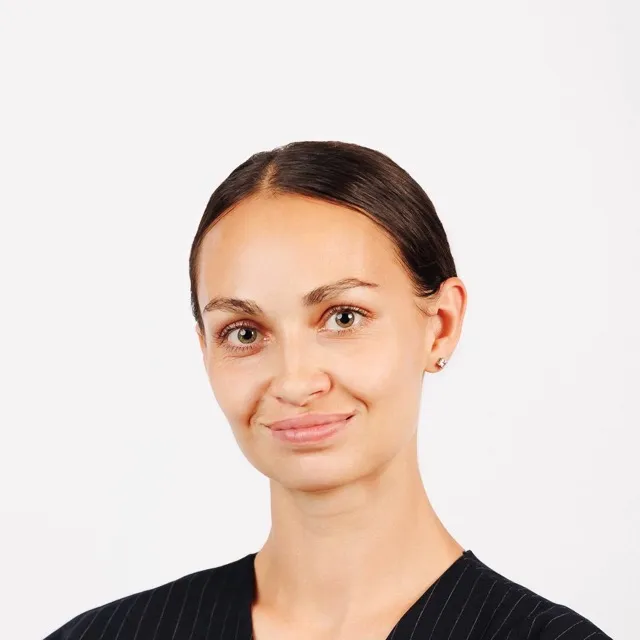
Ekaterina DybaPrincipal of Kaluga International School Russia
Career path
-
How did you become a school principal? What influenced your choice, and when did you realise you wanted to build your life around education?
I grew up naturally inside the school, from teaching assistant to principal. The founders wanted to hand the school over to someone who shares its philosophy, principles and approaches – someone in love with what they do. And so, in 2024, I became the principal. Since then the school has changed its direction a lot, focusing on high academic results and children’s achievements in science. We take great care in choosing our academic team, hiring the best people in the city. The main criteria are high professionalism, engagement and genuine care for children.
I often speak as an expert at regional and federal conferences and sit on expert panels and juries, but I don’t have any professional awards yet.
A school is a child who scrapes their knees, laughs and cries every day. And the wish to raise that child into a worthy person matters a great deal – that is probably what motivates me.
-
What does a principal’s work involve today?
A principal’s working day has a great many points of focus: parents should be satisfied, teachers inspired and children motivated. A school is a real child that always has something going on. So a principal’s task is not only to keep things running here and now, but also to plan for sustainable development in the future.
Education is a field of delayed results. You test a hypothesis and only see the result six months, a year or even five years later. Perhaps the hardest thing is not to get that hypothesis wrong. And if you do, to admit it.

-
What was the hardest part of this path for you, and why?
The hardest part was my lack of management experience, but it was a risk everyone took, putting their faith in a 30-year-old girl with teaching experience and a fire in her eyes. Learning to balance different demands and strategic directions also took time.
Prospects and change
-
How can you tell that a school is developing successfully?
A school is doing well when there are more applicants than places, when there is competition to get in. When a school doesn’t just teach but motivates and enriches not only children but adults too. I always look at several indicators: external assessment – olympiads, competitions, graduates; the professional skills of the academic team and its drive not to rest on its laurels. Lifelong learning is one of our school’s core values, and it starts with the adults. Another indicator is whether a child wants to stay at school after lessons.
-
How is the role of a school principal changing, and how is artificial intelligence affecting education?
In my view, the trend towards being multifunctional has reached education too. A modern principal has to be a teacher, a psychologist, a marketer, a community manager and a strategist – and above all a brave person who, on the one hand, is ready to try new things and, on the other, gives people something to hold on to in this fast-changing world. Introduce new things, but not everything at once. Stick to the values the school has set. Design the future. Steer around possible difficulties. Be proud of your team.
Education is always changing, but in my experience all the truly important principles and approaches were set long ago: discipline, respect, curiosity, consistency. Now many new layers are appearing: AI has firmly entered everyone’s life, and our task is to teach the young generation to use these technologies wisely without harming their development. It seems to me that we ourselves are only learning to live in this new reality and are adapting to these changes together with the children.
-
What are the main challenges facing schools today?
The main challenge for a modern school is to keep the spark of interest in a child’s eyes. Children live in a world of abundance: by the age of 7 many of them have visited different countries, mastered digital technology and been through all kinds of experiences. Today’s first-grader doesn’t arrive on 1 September wide-eyed and eager to learn. So the main challenge is to keep school interesting for a modern child.
Guide to the profession
-
Where and how can you train to become a school principal? What knowledge is truly necessary?
I think everyone has their own path, but a principal definitely needs to know and understand basic human psychology, understand child psychology, and be able to see the big picture without losing sight of the details. A principal is an inspirer and the face of the school. People want to see in them a bright future, a desire to make things better and to light a spark in children’s hearts.

-
What abilities and personal qualities help someone become a successful principal? Can leadership be learned?
Leadership definitely can’t be learned from scratch – it is a basic setting a person is born with and develops throughout life. A thirst for new things and the ability to admit mistakes are perhaps the qualities that drive a modern leader.
At the same time, personal qualities are extremely important, because behind every professional is an ordinary person who brews tea in their own special way, reads books at bedtime or goes for an evening walk, spends time with family or prefers to be alone. A thirst for new knowledge and skills, kindness, empathy, self-discipline and passion matter for any person, and for a principal too.
-
Where should someone start if they want to run a school one day?
Don’t be afraid to suggest ideas. Listen to your team. Be able to hear and understand people.
-
What would you advise a school student who is choosing a profession and wants to know whether teaching is right for them?
Teaching is a calling. It isn’t you who chooses whether to be a good teacher or not. Your task is to recognise your talent and be useful to other people.